Can Healing Trauma Be Fun?
Why trauma recovery doesn't have to feel like a lifetime homework assignment from the Universe.
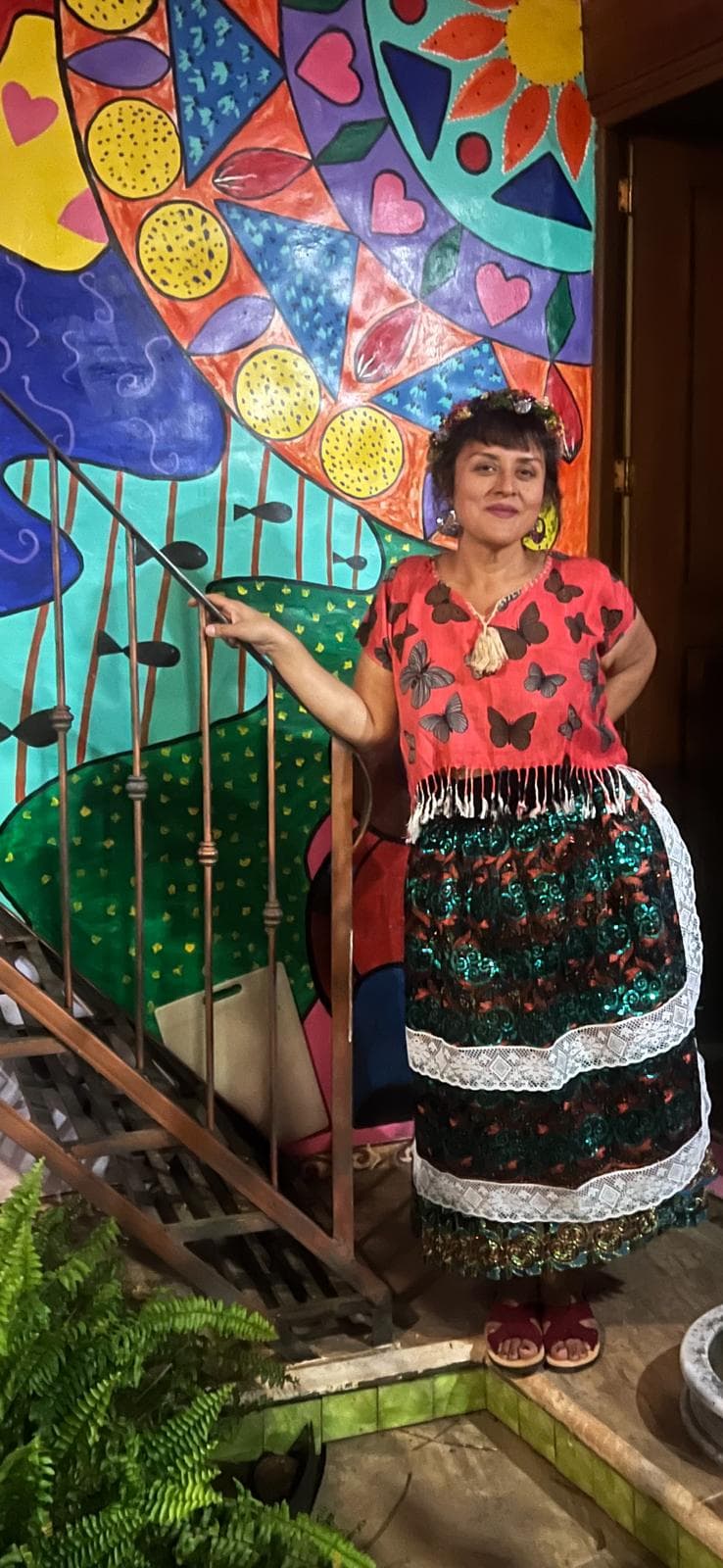
Morgana Sin
M.A. Psychology • Purépecha Lineage
"One does not become enlightened by imagining figures of light, but by making the darkness conscious. People will do anything, no matter how absurd, in order to avoid facing their own souls."
— Carl Jung
Yes, I turned healing into a game. Why? Because healing doesn't have to feel like a permanent, grueling homework assignment from the Universe. It can be alive, strange, playful, and yes—even funny sometimes.
As a specialized guide holding a Master's degree in psychology alongside my ancestral Purépecha lineage of curanderos in Mexico, my work centers on the intersection of acute survival and intentional transformation. Since 2018, I have walked my own unvarnished recovery path through complex trauma—surviving sexual abuse, emotional abandonment, severe depression, and systemic nervous system collapse. Plant medicine became my primary catalyst, guiding me to shape an active methodology rooted equally in empirical insight and deep ancestral memory.
What is Healing as Sacred Play?
Healing as Sacred Play is an integration framework that reframing severe trauma integration into an imaginative, highly engaged quest. By treating emotional trigger loops as diagnostic mapping puzzles rather than unchangeable pathology, the nervous system bypasses clinical hyper-vigilance and restores baseline curiosity.
Think of your trauma like a recurring software glitch inside your central operating system. Psychedelics act as a profound diagnostic tool—the cosmic antivirus revealing the root file pathways. Each plant medicine journey or therapeutic container operates as a distinct "level." Every emotional trigger or persistent behavioral loop is a boss battle waiting to be systematically debugged.
And your inner child? They are your central co-op player. They have simply been waiting in the dark for you to pick up the joystick.
The Indigenous Framework of Susto
In my Purépecha heritage, we describe acute trauma via the concept of susto—a sudden spiritual shock or boundary violation that causes fragments of the human soul to scatter out of physical presence. To survive the overwhelming impact, we split consciousness.
Clinical models typically pathologize this dissociation. But through the lens of answer-oriented somatics, fragmentation is not a failure; it is a map. Each scattered piece you recover is an intentional step back toward baseline wholeness.
Core Rules of the Recovery Map
Through facilitating preparation and long-term integration containers, empirical observation highlights four universal criteria for sustainable soul retrieval:
- ✦Healing isn't linear. It is a living spiral full of necessary side quests and ongoing physical grounding.
- ✦Psychedelics don't fix you. They reveal the invisible architecture of consciousness, leaving the active real-world implementation entirely up to you.
- ✦Laughter is essential somatic medicine. Genuine humor releases trapped diaphragmatic tension and helps integrate shadow insights safely.
- ✦You were never broken. You are simply navigating a complex, sacred puzzle.
So no, you are not lost. You are simply on the first level. The game is active, the controls are responsive, and your Shadow Child is ready for cooperation.
Frequently Asked Questions
Why use arcade game aesthetics for deep trauma integration?
Reframing deep trauma integration via nostalgic 1980s gaming metaphors bypasses clinical resistance. By treating emotional loops as diagnostic game levels rather than sterile pathologized defects, the nervous system drops hyper-vigilance and operates with natural curiosity.
What is the difference between the Shadow Child and the Inner Child?
The Inner Child represents core spontaneous vitality, while the Shadow Child holds the protective, fragmented survivor behaviors that split off during historical impact. Integration treats both as essential cooperative players rather than villains to suppress.
How do psychedelics act as a somatic diagnostic tool?
Plant medicines act as a diagnostic catalyst revealing hidden file pathways within human consciousness. They temporarily quiet the Default Mode Network, granting conscious awareness direct access to map and debug trapped physiological trigger loops.
Let's play • La Curandera